The two-zone problem
The filet finishes before the strip. Start strip-side over direct heat for the sear, then rotate to put the filet on the cooler side. Pull when the strip reads 125°F — the filet will be 120°F, which is right. Rest 10 minutes.

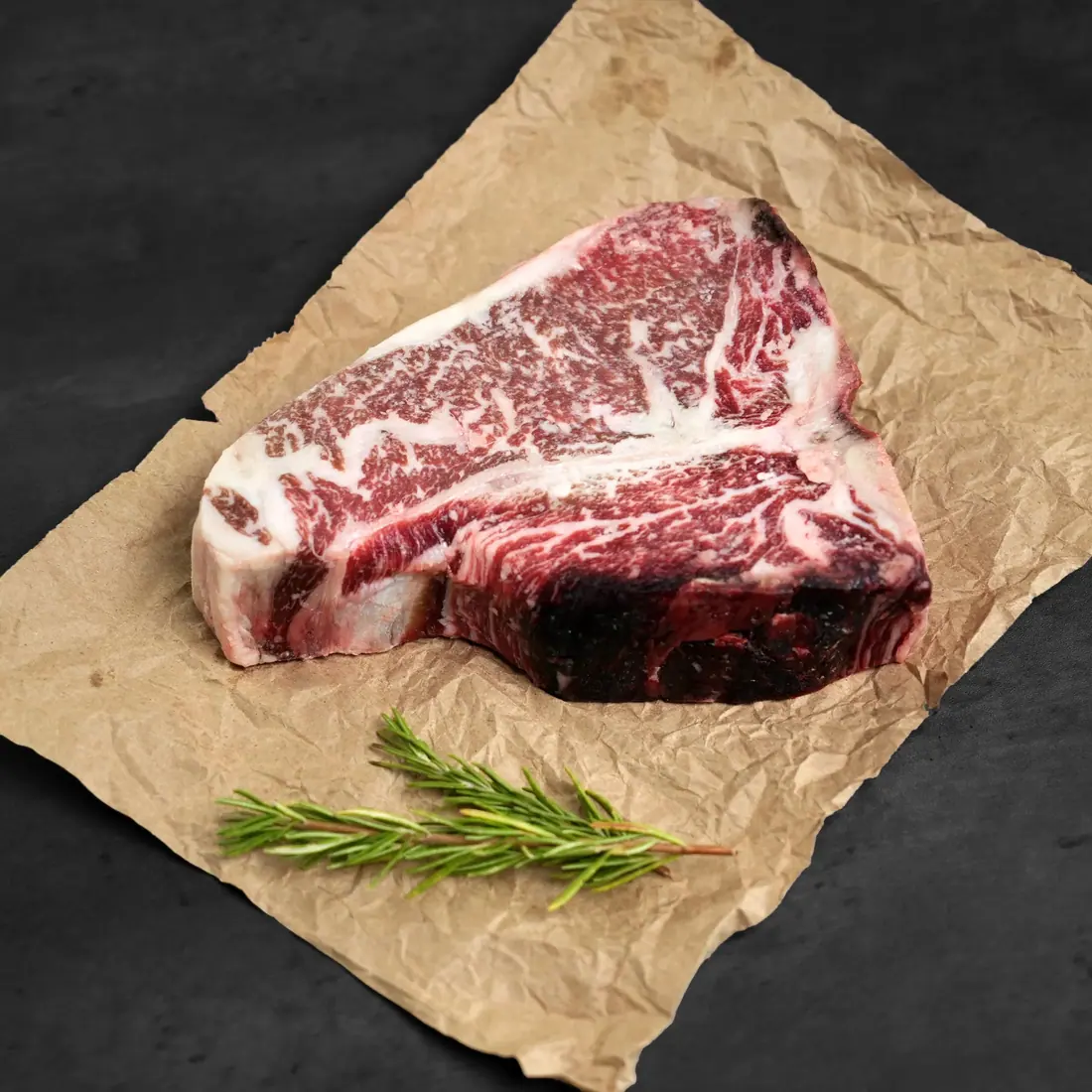
Two steaks separated by a T-bone — a strip on one side, a filet on the other. The whole short loin, dry-aged in the cellar.
A true porterhouse has both a generous strip steak and a generous filet, separated by a T-shaped bone. We cut from whole short loins, so the filet side is the real, large piece — a smaller filet means it is technically a T-bone, not a porterhouse.
Hung 28 days minimum, this is the steak we put in the case for two people who want to taste the difference between the two cuts in one sitting: the strip’s beef character against the filet’s quiet tenderness, both on the same bone.
Cut 1.5" to 2" thick. 32 to 40 oz typical. Tied off if you want it Frenched.
We cut it from whole short loins hung in our cellar for 28 days and beyond — see how we dry-age on the bone.
The filet finishes before the strip. Start strip-side over direct heat for the sear, then rotate to put the filet on the cooler side. Pull when the strip reads 125°F — the filet will be 120°F, which is right. Rest 10 minutes.
For the last two minutes, lay the steak bone-down. The bone shields against overcooking and adds a marrow note to the crust.
24 hours’ notice for special cuts and dry-aged whole loins, 48 for whole-animal items and holiday standing orders. We hold the case for the order with your name on it — that is the counter conversation behind every cut.